Gas (sometimes stylized in all caps), formerly known as Melt as well as Crush, was an American anonymous social media app. Launched in August 2022, the app is oriented towards high schoolers. The app was developed by Nikita Bier, Isaiah Turner, and former Facebook engineer Dave Schatz. Gas was largely based upon the prior tbh app developed by co-founder Nikita Bier, along with Erik Hazzard, Kyle Zaragoza, and Nicolas Ducdodon in September 2017. tbh was acquired by Facebook inc. (now Meta Platforms) on October 16, 2017, and nearly a year later in July 2018 was dissolved, owing to low usage. Gas follows a similar purpose to tbh in being a social media app oriented towards high schoolers. In the app, users participate in anonymous polls regarding pre-written complimentary statements to their peers, such as "I'd say yes if (blank) asked me out on a date," "I think (blank) is the coolest kid in school," or "would make an ugly face and still look pretty." Winners of said polls receive a "flame." The name of the app is derived from this, with "gassing someone up" being Gen Z slang for complimenting someone. Users can pay a $6.99 subscription that enables "God Mode," which shows hints regarding who voted for them in a poll. Gas overtook TikTok and BeReal as the most downloaded app on the Apple App Store in October 2022 (the app is currently not available for Android). The app has over 5.1 million downloads as of early November 2022, over a million active users and 300 thousand daily downloads as of October 2022. Currently, the app is available in Canada and the majority of the United States. On January 17, 2023, Gas was acquired by Discord, however it would remain a standalone app and its developers became Discord staff members. On October 18, 2023, Discord announced that service for Gas would be permanently ending effective November 7, 2023, due to a steep decline in users. Effective November 7, the app became completely unusable. == Controversy regarding human-trafficking == Beginning in October 2022, rumors spread largely throughout TikTok and Snapchat alleged that the app was linked to human trafficking (in particular sex trafficking). According to Bier, the rumor originated with a single user review from China on October 5, and then was disseminated through TikTok accounts with "few to no US teen followers." Although largely dismissed as a hoax by experts, who cite how the app doesn't log user locations and general anonymity, the hoax became pervasive to the extent that various police departments, school systems, and local news outlets began issuing warnings regarding the app. For instance, on October 31, 2022, the police department of Piedmont, Oklahoma issued a warning to parents, encouraging them to check their children's phones, while on November 3, the Oklahoma Oktaha Public School system stated in a Facebook post that "Children are being kidnapped in other towns and this new app is thought to be the source of predators finding their location." (both statements have since been retracted by Police Chief Scott Singer and Superintendent Jerry Needham respectively). Additionally, local medial outlets such as KOCO in Oklahoma City ran stories making similar statements. The rumor had a negative impact on the app, with downloads plateauing for a two-week period in late October and with 3% of users in a single day reportedly uninstalling the app. Revenue and ratings have also reportedly dropped and the company's social media accounts have been bombarded with comments labeling them as sex-traffickers. Additionally, the four-person development team has reportedly been bombarded with various death threats as a result.
Pedagogical agent
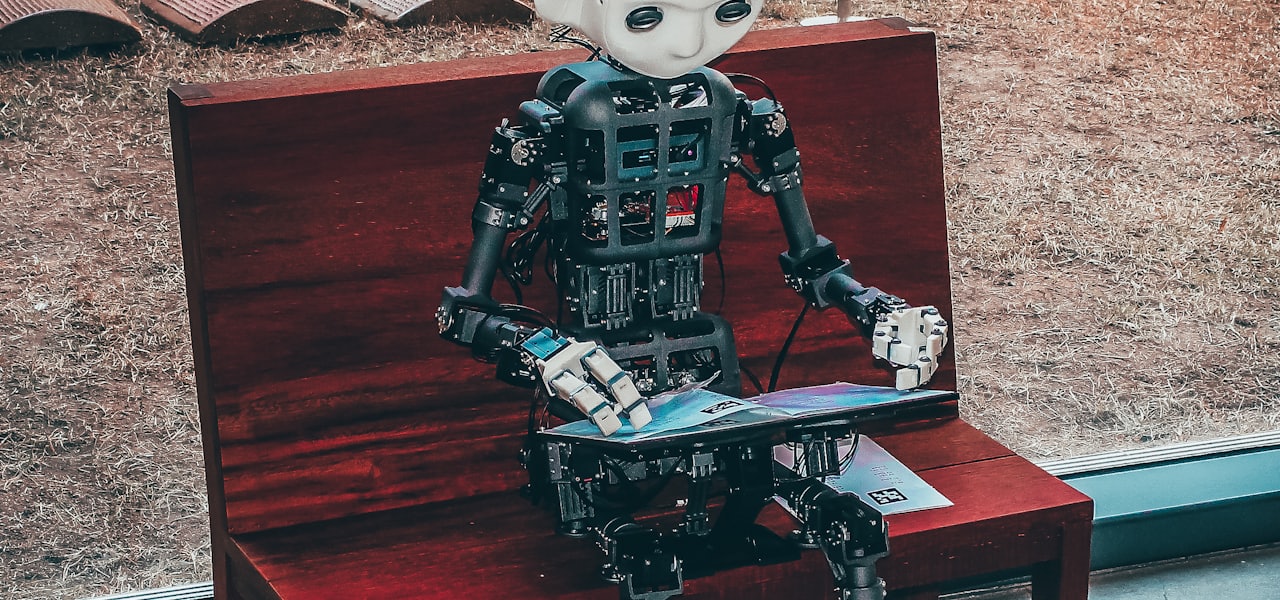
A pedagogical agent is a concept borrowed from computer science and artificial intelligence and applied to education, usually as part of an intelligent tutoring system (ITS). It is a simulated human-like interface between the learner and the content, in an educational environment. A pedagogical agent is designed to model the type of interactions between a student and another person. Mabanza and de Wet define it as "a character enacted by a computer that interacts with the user in a socially engaging manner". A pedagogical agent can be assigned different roles in the learning environment, such as tutor or co-learner, depending on the desired purpose of the agent. "A tutor agent plays the role of a teacher, while a co-learner agent plays the role of a learning companion". == History == The history of Pedagogical Agents is closely aligned with the history of computer animation. As computer animation progressed, it was adopted by educators to enhance computerized learning by including a lifelike interface between the program and the learner. The first versions of a pedagogical agent were more cartoon than person, like Microsoft's Clippy which helped users of Microsoft Office load and use the program's features in 1997. However, with developments in computer animation, pedagogical agents can now look lifelike. By 2006 there was a call to develop modular, reusable agents to decrease the time and expertise required to create a pedagogical agent. There was also a call in 2009 to enact agent standards. The standardization and re-usability of pedagogical agents is less of an issue since the decrease in cost and widespread availability of animation tools. Individualized pedagogical agents can be found across disciplines including medicine, math, law, language learning, automotive, and armed forces. They are used in applications directed to every age, from preschool to adult. == Learning theories related to pedagogical agent design == === Distributed cognition theory === Distributed cognition theory is the method in which cognition progresses in the context of collaboration with others. Pedagogical agents can be designed to assist the cognitive transfer to the learner, operating as artifacts or partners with collaborative role in learning. To support the performance of an action by the user, the pedagogical agent can act as a cognitive tool as long as the agent is equipped with the knowledge that the user lacks. The interactions between the user and the pedagogical agent can facilitate a social relationship. The pedagogical agent may fulfill the role of a working partner. === Socio-cultural learning theory === Socio-cultural learning theory is how the user develops when they are involved in learning activities in which there is interaction with other agents. A pedagogical agent can: intervene when the user requests, provide support for tasks that the user cannot address, and potentially extend the learners cognitive reach. Interaction with the pedagogical agent may elicit a variety of emotions from the learner. The learner may become excited, confused, frustrated, and/or discouraged. These emotions affect the learners' motivation. === Extraneous Cognitive Load === Extraneous cognitive load is the extra effort being exerted by an individual's working memory due to the way information is being presented. A pedagogical agent can increase the user's cognitive load by distracting them and becoming the focus of their attention, causing split attention between the instructional material and the agent. Agents can reduce the perceived cognitive load by providing narration and personalization that can also promote a user's interest and motivation. While research on the reduction of cognitive load from pedagogical agents is minimal, more studies have shown that agents do not increase it. == Effectiveness == It has been suggested by researchers that pedagogical agents may take on different roles in the learning environment. Examples of these roles are: supplanting, scaffolding, coaching, testing, or demonstrating or modelling a procedure. A pedagogical agent as a tutor has not been demonstrated to add any benefit to an educational strategy in equivalent lessons with and without a pedagogical agent. According to Richard Mayer, there is some support in research for pedagogical agent increasing learning, but only as a presenter of social cues. A co-learner pedagogical agent is believed to increase the student's self-efficacy. By pointing out important features of instructional content, a pedagogical agent can fulfill the signaling function, which research on multimedia learning has shown to enhance learning. Research has demonstrated that human-human interaction may not be completely replaced by pedagogical agents, but learners may prefer the agents to non-agent multimedia systems. This finding is supported by social agency theory. Much like the varying effectiveness of the pedagogical agent roles in the learning environment, agents that take into account the user's affect have had mixed results. Research has shown pedagogical agents that make use of the users’ affect have been found to increase user knowledge retention, motivation, and perceived self-efficacy. However, with such a broad range of modalities in affective expressions, it is often difficult to utilize them. Additionally, having agents detect a user's affective state with precision remains challenging, as displays of affect are different across individuals. == Design == === Attractiveness === The appearance of a pedagogical agent can be manipulated to meet the learning requirements. The attractiveness of a pedagogical agent can enhance student's learning when the users were the opposite gender of the pedagogical agent. Male students prefer a sexy appearance of a female pedagogical agents and dislike the sexy appearance of male agents. Female students were not attracted by the sexy appearance of either male or female pedagogical agents. === Affective Response === Pedagogical agents have reached a point where they can convey and elicit emotion, but also reason about and respond to it. These agents are often designed to elicit and respond to affective actions from users through various modalities such as speech, facial expressions, and body gestures. They respond to the affective state of the given user, and make use of these modalities using a wide array of sensors incorporated into the design of the agent. Specifically in education and training applications, pedagogical agents are often designed to increasingly recognize when users or learners exhibit frustration, boredom, confusion, and states of flow. The added recognition in these agents is a step toward making them more emotionally intelligent, comforting and motivating the users as they interact. === Digital Representation === The design of a pedagogical agent often begins with its digital representation, whether it will be 2D or 3D and static or animated. Several studies have developed pedagogical agents that were both static and animated, then evaluated the relative benefits. Similar to other design considerations, the improved learning from static or animated agents remains questionable. One study showed that the appearance of an agent portrayed using a static image can impact a user's recall, based on the visual appearance. Other research found results that suggest static agent images improve learning outcomes. However, several other studies found user's learned more when the pedagogical agent was animated rather than static. Recently a meta-analysis of such research found a negligible improvement in learning via pedagogical agents, suggesting more work needs to be done in the area to support any claims.
Promoter based genetic algorithm
The promoter based genetic algorithm (PBGA) is a genetic algorithm for neuroevolution developed by F. Bellas and R.J. Duro in the Integrated Group for Engineering Research (GII) at the University of Coruña, in Spain. It evolves variable size feedforward artificial neural networks (ANN) that are encoded into sequences of genes for constructing a basic ANN unit. Each of these blocks is preceded by a gene promoter acting as an on/off switch that determines if that particular unit will be expressed or not. == PBGA basics == The basic unit in the PBGA is a neuron with all of its inbound connections as represented in the following figure: The genotype of a basic unit is a set of real valued weights followed by the parameters of the neuron and proceeded by an integer valued field that determines the promoter gene value and, consequently, the expression of the unit. By concatenating units of this type we can construct the whole network. With this encoding it is imposed that the information that is not expressed is still carried by the genotype in evolution but it is shielded from direct selective pressure, maintaining this way the diversity in the population, which has been a design premise for this algorithm. Therefore, a clear difference is established between the search space and the solution space, permitting information learned and encoded into the genotypic representation to be preserved by disabling promoter genes. == Results == The PBGA was originally presented within the field of autonomous robotics, in particular in the real time learning of environment models of the robot. It has been used inside the Multilevel Darwinist Brain (MDB) cognitive mechanism developed in the GII for real robots on-line learning. In another paper it is shown how the application of the PBGA together with an external memory that stores the successful obtained world models, is an optimal strategy for adaptation in dynamic environments. Recently, the PBGA has provided results that outperform other neuroevolutionary algorithms in non-stationary problems, where the fitness function varies in time.
Sharpness aware minimization
Sharpness Aware Minimization (SAM) is an optimization algorithm used in machine learning that aims to improve model generalization. The method seeks to find model parameters that are located in regions of the loss landscape with uniformly low loss values, rather than parameters that only achieve a minimal loss value at a single point. This approach is described as finding "flat" minima instead of "sharp" ones. The rationale is that models trained this way are less sensitive to variations between training and test data, which can lead to better performance on unseen data. The algorithm was introduced in a 2020 paper by a team of researchers including Pierre Foret, Ariel Kleiner, Hossein Mobahi, and Behnam Neyshabur. == Underlying Principle == SAM modifies the standard training objective by minimizing a "sharpness-aware" loss. This is formulated as a minimax problem where the inner objective seeks to find the highest loss value in the immediate neighborhood of the current model weights, and the outer objective minimizes this value: min w max ‖ ϵ ‖ p ≤ ρ L train ( w + ϵ ) + λ ‖ w ‖ 2 2 {\displaystyle \min _{w}\max _{\|\epsilon \|_{p}\leq \rho }L_{\text{train}}(w+\epsilon )+\lambda \|w\|_{2}^{2}} In this formulation: w {\displaystyle w} represents the model's parameters (weights). L train {\displaystyle L_{\text{train}}} is the loss calculated on the training data. ϵ {\displaystyle \epsilon } is a perturbation applied to the weights. ρ {\displaystyle \rho } is a hyperparameter that defines the radius of the neighborhood (an L p {\displaystyle L_{p}} ball) to search for the highest loss. An optional L2 regularization term, scaled by λ {\displaystyle \lambda } , can be included. A direct solution to the inner maximization problem is computationally expensive. SAM approximates it by taking a single gradient ascent step to find the perturbation ϵ {\displaystyle \epsilon } . This is calculated as: ϵ ( w ) = ρ ∇ L train ( w ) ‖ ∇ L train ( w ) ‖ 2 {\displaystyle \epsilon (w)=\rho {\frac {\nabla L_{\text{train}}(w)}{\|\nabla L_{\text{train}}(w)\|_{2}}}} The optimization process for each training step involves two stages. First, an "ascent step" computes a perturbed set of weights, w adv = w + ϵ ( w ) {\displaystyle w_{\text{adv}}=w+\epsilon (w)} , by moving towards the direction of the highest local loss. Second, a "descent step" updates the original weights w {\displaystyle w} using the gradient calculated at these perturbed weights, ∇ L train ( w adv ) {\displaystyle \nabla L_{\text{train}}(w_{\text{adv}})} . This update is typically performed using a standard optimizer like SGD or Adam. == Application and Performance == SAM has been applied in various machine learning contexts, primarily in computer vision. Research has shown it can improve generalization performance in models such as Convolutional Neural Networks (CNNs) and Vision Transformers (ViTs) on image datasets including ImageNet, CIFAR-10, and CIFAR-100. The algorithm has also been found to be effective in training models with noisy labels, where it performs comparably to methods designed specifically for this problem. Some studies indicate that SAM and its variants can improve out-of-distribution (OOD) generalization, which is a model's ability to perform well on data from distributions not seen during training. Other areas where it has been applied include gradual domain adaptation and mitigating overfitting in scenarios with repeated exposure to training examples. == Limitations == A primary limitation of SAM is its computational cost. By requiring two gradient computations (one for the ascent and one for the descent) per optimization step, it approximately doubles the training time compared to standard optimizers. The theoretical convergence properties of SAM are still under investigation. Some research suggests that with a constant step size, SAM may not converge to a stationary point. The accuracy of the single gradient step approximation for finding the worst-case perturbation may also decrease during the training process. The effectiveness of SAM can also be domain-dependent. While it has shown benefits for computer vision tasks, its impact on other areas, such as GPT-style language models where each training example is seen only once, has been reported as limited in some studies. Furthermore, while SAM seeks flat minima, some research suggests that not all flat minima necessarily lead to good generalization. The algorithm also introduces the neighborhood size ρ {\displaystyle \rho } as a new hyperparameter, which requires tuning. == Research, Variants, and Enhancements == Active research on SAM focuses on reducing its computational overhead and improving its performance. Several variants have been proposed to make the algorithm more efficient. These include methods that attempt to parallelize the two gradient computations, apply the perturbation to only a subset of parameters, or reduce the number of computation steps required. Other approaches use historical gradient information or apply SAM steps intermittently to lower the computational burden. To improve performance and robustness, variants have been developed that adapt the neighborhood size based on model parameter scales (Adaptive SAM or ASAM) or incorporate information about the curvature of the loss landscape (Curvature Regularized SAM or CR-SAM). Other research explores refining the perturbation step by focusing on specific components of the gradient or combining SAM with techniques like random smoothing. Theoretical work continues to analyze the algorithm's behavior, including its implicit bias towards flatter minima and the development of broader frameworks for sharpness-aware optimization that use different measures of sharpness.
Ho–Kashyap algorithm
The Ho–Kashyap algorithm is an iterative method in machine learning for finding a linear decision boundary that separates two linearly separable classes. It was developed by Yu-Chi Ho and Rangasami L. Kashyap in 1965, and usually presented as a problem in linear programming. == Setup == Given a training set consisting of samples from two classes, the Ho–Kashyap algorithm seeks to find a weight vector w {\displaystyle \mathbf {w} } and a margin vector b {\displaystyle \mathbf {b} } such that: Y w = b {\displaystyle \mathbf {Yw} =\mathbf {b} } where Y {\displaystyle \mathbf {Y} } is the augmented data matrix with samples from both classes (with appropriate sign conventions, e.g., samples from class 2 are negated), w {\displaystyle \mathbf {w} } is the weight vector to be determined, and b {\displaystyle \mathbf {b} } is a positive margin vector. The algorithm minimizes the criterion function: J ( w , b ) = | | Y w − b | | 2 {\displaystyle J(\mathbf {w} ,\mathbf {b} )=||\mathbf {Yw} -\mathbf {b} ||^{2}} subject to the constraint that b > 0 {\displaystyle \mathbf {b} >\mathbf {0} } (element-wise). Given a problem of linearly separating two classes, we consider a dataset of elements { ( x i , y i ) } i ∈ 1 : N {\displaystyle \{(\mathbf {x_{i}} ,y_{i})\}_{i\in 1:N}} where y i ∈ { − 1 , + 1 } {\displaystyle y_{i}\in \{-1,+1\}} . Linearly separating them by a perceptron is equivalent to finding weight and bias w , b {\displaystyle \mathbf {w} ,b} for a perceptron, such that: [ y 1 x 1 1 ⋮ ⋮ y N x N 1 ] [ w b ] > 0 {\displaystyle {\begin{bmatrix}y_{1}\mathbf {x} _{1}&1\\\vdots &\vdots \\y_{N}\mathbf {x} _{N}&1\\\end{bmatrix}}{\begin{bmatrix}\mathbf {w} \\b\end{bmatrix}}>0} == Algorithm == The idea of the Ho–Kashyap algorithm is as follows: Given any b {\displaystyle \mathbf {b} } , the corresponding w {\displaystyle \mathbf {w} } is known: It is simply w = Y + b {\displaystyle \mathbf {w} =\mathbf {Y} ^{+}\mathbf {b} } , where Y + {\displaystyle \mathbf {Y} ^{+}} denotes the Moore–Penrose pseudoinverse of Y {\displaystyle \mathbf {Y} } . Therefore, it only remains to find b {\displaystyle \mathbf {b} } by gradient descent. However, the gradient descent may sometimes decrease some of the coordinates of b {\displaystyle \mathbf {b} } , which may cause some coordinates of b {\displaystyle \mathbf {b} } to become negative, which is undesirable. Therefore, whenever some coordinates of b {\displaystyle \mathbf {b} } would have decreased, those coordinates are unchanged instead. As for the coordinates of b {\displaystyle \mathbf {b} } that would increase, those would increase without issue. Formally, the algorithm is as follows: Initialization: Set b ( 0 ) {\displaystyle \mathbf {b} (0)} to an arbitrary positive vector, typically b ( 0 ) = 1 {\displaystyle \mathbf {b} (0)=\mathbf {1} } (a vector of ones). Set the iteration counter k = 0 {\displaystyle k=0} . Set w ( 0 ) = Y + b ( 0 ) {\displaystyle \mathbf {w} (0)=\mathbf {Y} ^{+}\mathbf {b} (0)} Loop until convergence, or until iteration counter exceeds some k m a x {\displaystyle k_{max}} . Error calculation: Compute the error vector: e ( k ) = Y w ( k ) − b ( k ) {\displaystyle \mathbf {e} (k)=\mathbf {Yw} (k)-\mathbf {b} (k)} . Margin update: Update the margin vector: b ( k + 1 ) = b ( k ) + 2 η k ( e ( k ) + | e ( k ) | ) {\displaystyle \mathbf {b} (k+1)=\mathbf {b} (k)+2\eta _{k}(\mathbf {e} (k)+|\mathbf {e} (k)|)} where η k {\displaystyle \eta _{k}} is a positive learning rate parameter, and | e ( k ) | {\displaystyle |\mathbf {e} (k)|} denotes the element-wise absolute value. Weight calculation: Compute the weight vector using the pseudoinverse: w ( k + 1 ) = Y + b ( k + 1 ) {\displaystyle \mathbf {w} (k+1)=\mathbf {Y} ^{+}\mathbf {b} (k+1)} . Convergence check: If | | e ( k ) | | ≤ θ {\displaystyle ||\mathbf {e} (k)||\leq \theta } for some predetermined threshold θ {\displaystyle \theta } (close to zero), then return b ( k + 1 ) , w ( k + 1 ) {\displaystyle \mathbf {b} (k+1),\mathbf {w} (k+1)} . if e ( k ) ≤ 0 {\displaystyle \mathbf {e} (k)\leq \mathbf {0} } (all components non-positive), return "Samples not separable.". Return "Algorithm failed to converge in time.". == Properties == If the training data is linearly separable, the algorithm converges to a solution (where e ( k ) = 0 {\displaystyle \mathbf {e} (k)=\mathbf {0} } ) in a finite number of iterations. If the data is not linearly separable, the algorithm may or may not ever reach the point where e ( k ) = 0 {\displaystyle \mathbf {e} (k)=\mathbf {0} } . However, if it does happen that e ( k ) ≤ 0 {\displaystyle \mathbf {e} (k)\leq \mathbf {0} } at some iteration, this proves non-separability. The convergence rate depends on the choice of the learning rate parameter ρ {\displaystyle \rho } and the degree of linear separability of the data. == Relationship to other algorithms == Perceptron algorithm: Both seek linear separators. The perceptron updates weights incrementally based on individual misclassified samples, while Ho–Kashyap is a batch method that processes all samples to compute the pseudoinverse and updates based on an overall error vector. Linear discriminant analysis (LDA): LDA assumes underlying Gaussian distributions with equal covariances for the classes and derives the decision boundary from these statistical assumptions. Ho–Kashyap makes no explicit distributional assumptions and instead tries to solve a system of linear inequalities directly. Support vector machines (SVM): For linearly separable data, SVMs aim to find the maximum-margin hyperplane. The Ho–Kashyap algorithm finds a separating hyperplane but not necessarily the one with the maximum margin. If the data is not separable, soft-margin SVMs allow for some misclassifications by optimizing a trade-off between margin size and misclassification penalty, while Ho–Kashyap provides a least-squares solution. == Variants == Modified Ho–Kashyap algorithm changes weight calculation step w ( k + 1 ) = Y + b ( k + 1 ) {\displaystyle \mathbf {w} (k+1)=\mathbf {Y} ^{+}\mathbf {b} (k+1)} to w ( k + 1 ) = w ( k ) + η k Y + | e ( k ) | {\displaystyle \mathbf {w} (k+1)=\mathbf {w} (k)+\eta _{k}\mathbf {Y} ^{+}|\mathbf {e} (k)|} . Kernel Ho–Kashyap algorithm: Applies kernel methods (the "kernel trick") to the Ho–Kashyap framework to enable non-linear classification by implicitly mapping data to a higher-dimensional feature space.
Capture the flag (cybersecurity)
In computer security, Capture the Flag (CTF) is an exercise in which participants attempt to find text strings, called "flags", which are secretly hidden in purposefully vulnerable programs or websites. They can be used for both competitive or educational purposes. In two main variations of CTFs, participants either steal flags from other participants (attack/defense-style CTFs) or from organizers (jeopardy-style challenges). A mixed competition combines these two styles. Competitions can include hiding flags in hardware devices, they can be both online or in-person, and can be advanced or entry-level. The game is inspired by the traditional outdoor sport with the same name. CTFs are used as a tool for developing and refining cybersecurity skills, making them popular in both professional and academic settings. == Overview == Capture the Flag (CTF) is a cybersecurity competition that is used to test and develop computer security skills. It was first developed in 1996 at DEF CON, the largest cybersecurity conference in the United States which is hosted annually in Las Vegas, Nevada. The conference hosts a weekend of cybersecurity competitions, including their flagship CTF. Two popular CTF formats are jeopardy and attack-defense. Both formats test participant’s knowledge in cybersecurity, but differ in objective. In the Jeopardy format, participating teams must complete as many challenges of varying point values from a various categories such as cryptography, web exploitation, and reverse engineering. In the attack-defense format, competing teams must defend their vulnerable computer systems while attacking their opponent's systems. The exercise involves a diverse array of tasks, including exploitation and cracking passwords, but there is little evidence showing how these tasks translate into cybersecurity knowledge held by security experts. Recent research has shown that the Capture the Flag tasks mainly covered technical knowledge but lacked social topics like social engineering and awareness on cybersecurity. == Educational applications == CTFs have been shown to be an effective way to improve cybersecurity education through gamification. There are many examples of CTFs designed to teach cybersecurity skills to a wide variety of audiences, including PicoCTF, organized by the Carnegie Mellon CyLab, which is oriented towards high school students, and Arizona State University supported pwn.college. Beyond educational CTF events and resources, CTFs has been shown to be a highly effective way to instill cybersecurity concepts in the classroom. CTFs have been included in undergraduate computer science classes such as Introduction to Information Security at the National University of Singapore. CTFs are also popular in military academies. They are often included as part of the curriculum for cybersecurity courses, with the NSA organized Cyber Exercise culminating in a CTF competition between the US service academies and military colleges. == Competitions == Many CTF organizers register their competition with the CTFtime platform. This allows the tracking of the position of teams over time and across competitions. These include "Plaid Parliament of Pwning", "More Smoked Leet Chicken", "Dragon Sector", "dcua", "Eat, Sleep, Pwn, Repeat", "perfect blue", "organizers" and "Blue Water". Overall the "Plaid Parliament of Pwning" and "Dragon Sector" have both placed first worldwide the most with three times each. === Community competitions === Every year there are dozens of CTFs organized in a variety of formats. Many CTFs are associated with cybersecurity conferences such as DEF CON, various editions of SANS Institute's NetWars, HITCON, and BSides. The DEF CON CTF, an attack-defence CTF, is notable for being one of the oldest CTF competitions to exist, and has been variously referred to as the "World Series", "Superbowl", and "Olympics", of hacking by media outlets. The NYU Tandon hosted Cybersecurity Awareness Worldwide (CSAW) CTF is one of the largest open-entry competitions for students learning cybersecurity from around the world. In 2021, it hosted over 1200 teams during the qualification round. In addition to conference organized CTFs, many CTF clubs and teams organize CTF competitions. Many CTF clubs and teams are associated with universities, such as the CMU associated Plaid Parliament of Pwning, which hosts PlaidCTF, and the ASU associated Shellphish. Some community CTFs are online and open to all participants. The SANS Institute Holiday Hack Challenge and TryHackMe Advent of Cyber. === Government-supported competitions === Governmentally supported CTF competitions include the DARPA Cyber Grand Challenge and ENISA European Cybersecurity Challenge. In 2023, the US Space Force-sponsored Hack-a-Sat CTF competition included, for the first time, a live orbital satellite for participants to exploit. === Corporate-supported competitions === Corporations and other organizations sometimes use CTFs as a training or evaluation exercise, with benefits similar to those in educational settings. In addition to internal CTF exercises, some corporations such as Google and Tencent host publicly accessible CTF competitions. == In popular culture == In Mr. Robot, a qualification round for the DEF CON CTF competition is depicted in the season 3 opener "eps3.0_power-saver-mode.h". The logo for DEF CON can be seen in the background. In The Undeclared War, a CTF is depicted in the opening scene of the series as a recruitment exercise used by GCHQ. Go Go Squid!, a Chinese television series, is based around training for and competing in highly stylized CTF competitions .
Iris flower data set
The Iris flower data set or Fisher's Iris data set is a multivariate data set used and made famous by the British statistician and biologist Ronald Fisher in his 1936 paper The use of multiple measurements in taxonomic problems as an example of linear discriminant analysis. It is sometimes called Anderson's Iris data set because Edgar Anderson collected the data to quantify the morphologic variation of Iris flowers of three related species. Two of the three species were collected in the Gaspé Peninsula "all from the same pasture, and picked on the same day and measured at the same time by the same person with the same apparatus". The data set consists of 50 samples from each of three species of Iris (Iris setosa, Iris virginica and Iris versicolor). Four features were measured from each sample: the length and the width of the sepals and petals, in centimeters. Based on the combination of these four features, Fisher developed a linear discriminant model to distinguish each species. Fisher's paper was published in the Annals of Eugenics (today the Annals of Human Genetics). == Use of the data set == Originally used as an example data set on which Fisher's linear discriminant analysis was applied, it became a typical test case for many statistical classification techniques in machine learning such as support vector machines. The use of this data set in cluster analysis however is not common, since the data set only contains two clusters with rather obvious separation. One of the clusters contains Iris setosa, while the other cluster contains both Iris virginica and Iris versicolor and is not separable without the species information Fisher used. This makes the data set a good example to explain the difference between supervised and unsupervised techniques in data mining: Fisher's linear discriminant model can only be obtained when the object species are known: class labels and clusters are not necessarily the same. Nevertheless, all three species of Iris are separable in the projection on the nonlinear and branching principal component. The data set is approximated by the closest tree with some penalty for the excessive number of nodes, bending and stretching. Then the so-called "metro map" is constructed. The data points are projected into the closest node. For each node the pie diagram of the projected points is prepared. The area of the pie is proportional to the number of the projected points. It is clear from the diagram (left) that the absolute majority of the samples of the different Iris species belong to the different nodes. Only a small fraction of Iris-virginica is mixed with Iris-versicolor (the mixed blue-green nodes in the diagram). Therefore, the three species of Iris (Iris setosa, Iris virginica and Iris versicolor) are separable by the unsupervising procedures of nonlinear principal component analysis. To discriminate them, it is sufficient just to select the corresponding nodes on the principal tree. == Data set == The data set contains a set of 150 records under five attributes: sepal length, sepal width, petal length, petal width and species. The iris data set is widely used as a beginner's data set for machine learning purposes. The data set is included in R base and Python in the machine learning library scikit-learn, so that users can access it without having to find a source for it. Several versions of the data set have been published. === R code illustrating usage === The example R code shown below reproduce the scatterplot displayed at the top of this article: === Python code illustrating usage === This code gives: